
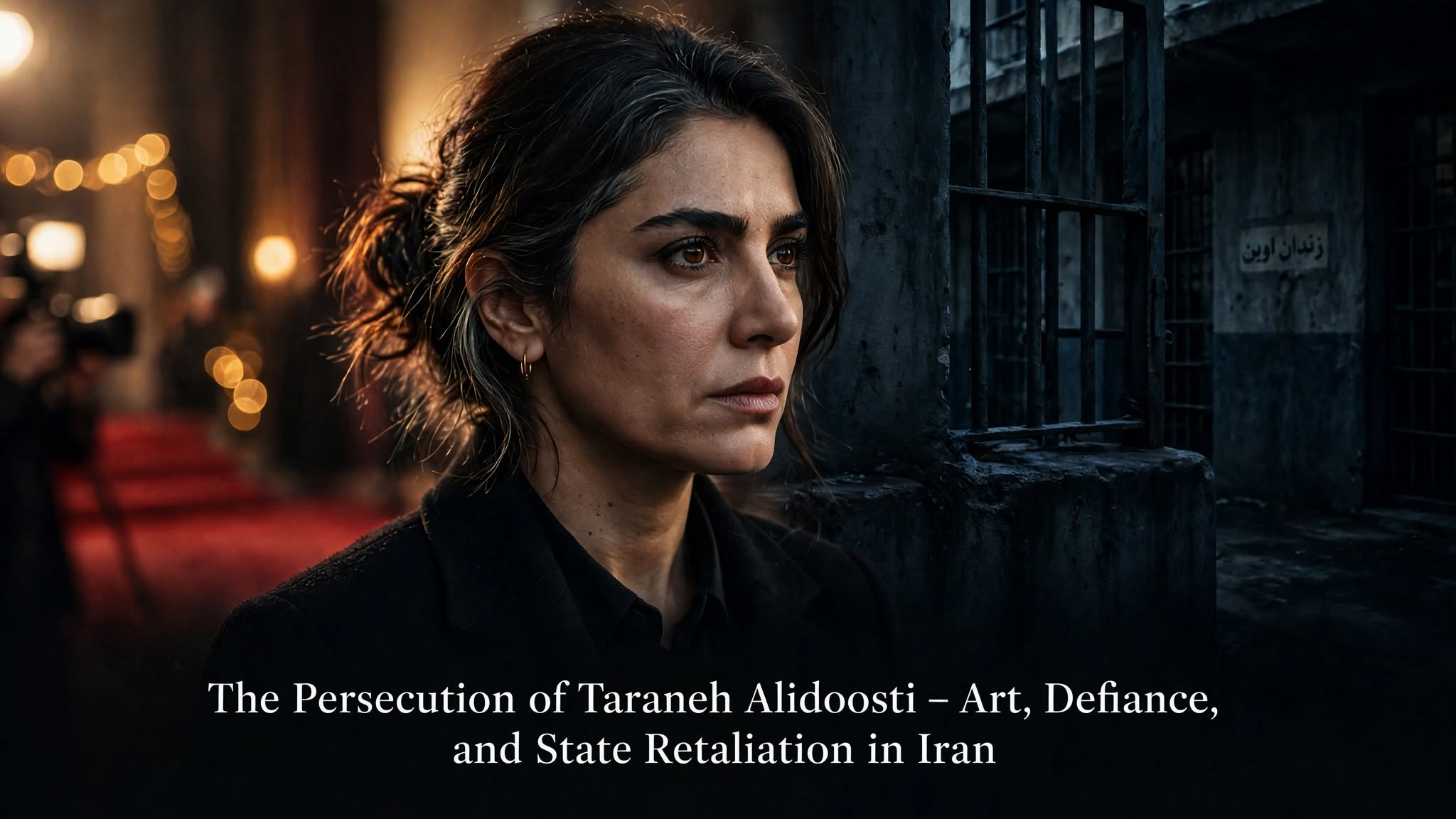
The intersection of artistic integrity, human rights, and state control has rarely been illustrated with such poignant clarity as in the case of Taraneh Alidoosti. Globally celebrated as one of Iranian cinema’s most gifted performers, Alidoosti’s transition from international red carpets to the isolation cells of Tehran’s Evin Prison offers a window into the cost of dissent inside the Islamic Republic. Those who regularly Read Latest News Online regarding Middle Eastern geopolitics and cultural resistance have tracked her journey not merely as a celebrity chronicle, but as a defining benchmark of the “Woman, Life, Freedom” movement.
Alidoosti’s story exposes the administrative, judicial, and physiological pressures deployed against public figures who challenge state orthodoxies. Following her outspoken stance during the historic 2022 protests, her solitary confinement, subsequent professional blacklisting, and a severe diagnosis of Drug Reaction with Eosinophilia and Systemic Symptoms (DRESS Syndrome) reveal how state mechanisms penalize cultural icons who decline to remain silent.
Also Read: The Confessions of a Trapped Soul: Part 1 — The Locked Room
The Cinematic Foundation: An International Ambassador of Iranian Culture
To appreciate the gravity of the Iranian regime’s retribution against Taraneh Alidoosti, one must understand her stature in contemporary world cinema. Born in Tehran in 1984 to a sporting and artistic household, Alidoosti established her reputation at age seventeen with her breakthrough performance in Rasul Sadrameli’s I’m Taraneh, 15 (2002). Her depiction of an adolescent mother navigating rigid social structures earned her the Best Actress award at the Locarno International Film Festival, positioning her as an actress of singular emotional depth.
Her career reached global prominence through her creative collaborations with two-time Academy Award-winning filmmaker Asghar Farhadi. Alidoosti became a central figure in Farhadi’s moral dramas, starring in Beautiful City (2004), Fireworks Wednesday (2006), About Elly (2009), and The Salesman (2016). In The Salesman, which won the Oscar for Best Foreign Language Film, her portrayal of Rana—a woman coping with post-traumatic shock following an assault in her apartment—garnered praise for its subtlety and restraint.
Alidoosti had long used her platform to express principled stances. In early 2017, she boycotted the 89th Academy Awards ceremony in protest of the United States’ executive order restricting travel from several Muslim-majority nations, including Iran, characterizing the visa ban as racist and unacceptable. This international defiance established that her convictions were consistent, regardless of which government enacted discriminatory policies.
Beyond art-house films, Alidoosti became a household name across Iran through her role as the titular lead in the streaming series Shahrzad (2015–2018), an elaborate historical drama set against the backdrop of the 1953 Iranian coup d’état. Her commanding screen presence, cultural literacy, and critical acclaim made her one of the most visible cultural figures in modern Iran.
The Catalyst: “Woman, Life, Freedom” and the Unveiling
The socio-political fabric of Iran shifted dramatically in September 2022 following the death of 22-year-old Jina Mahsa Amini in the custody of the Guidance Patrol (morality police). Amini had been detained for allegedly violating mandatory dress codes. Her death sparked a wave of national rebellion. Unlike previous protest cycles centered on economic austerity or localized electoral disputes, the 2022 uprising went to the foundation of the state’s ideological identity, adopting the Kurdish slogan: Zan, Zhendegi, Azadi (“Woman, Life, Freedom”).
For women across Iran, resistance took the form of removing and burning headscarves in public spaces, walking unveiled through city streets, and cutting their hair in acts of mourning and defiance. Iranian authorities responded with force, deploying the Islamic Revolutionary Guard Corps (IRGC), the Basij paramilitary militia, and local security branches to suppress protests with live ammunition, pellet shot, mass detentions, and show trials.
As public figures came under state surveillance, many international artists hesitated. Alidoosti chose public solidarity. In November 2022, she published a photograph of herself on Instagram without the compulsory hijab. Looking directly into the lens with her hair uncovered, she held a placard bearing the slogan “Woman, Life, Freedom” written in Kurdish script.
Accompanying the image, she published a statement affirming her choice to remain inside Iran rather than flee:
“I will stay, I will stop working. I will stand by the families of prisoners and the killed. I will demand their rights. I will fight for my home. I will pay whatever price is necessary to stand up for my rights.”
By removing her headscarf and sharing the image to millions of followers, Alidoosti knowingly crossed a statutory red line. In the eyes of the Ministry of Culture and Islamic Guidance and the judiciary, she transformed herself from an acclaimed cultural ambassador into an active dissident.
The Execution of Mohsen Shekari and Alidoosti’s Arrest
The escalation reached a critical juncture in December 2022, when the Islamic Republic carried out its first execution linked directly to the protest movement. On December 8, 2022, authorities hanged 23-year-old Mohsen Shekari, who had been convicted in a summary trial of moharebeh (“enmity against God”) for allegedly blocking a street in Tehran and injuring a member of the Basij militia with a knife.
The execution provoked outrage across Iran and abroad, widely condemned as a judicial murder intended to terrify the population into submission. While many public figures remained cautious, Alidoosti posted a direct critique of domestic silence and international apathy on her social media platforms:
“His name was Mohsen Shekari. Every international organization that is watching this bloodshed and not taking action is a disgrace to humanity. Your silence means supporting the tyranny and the oppressor.”
Her condemnation was the final trigger for state apparatuses. On December 17, 2022, security personnel raided her home in Tehran. Her premises were searched, her personal electronics and digital archives seized, and she was arrested without advance judicial summons.
State news agency IRNA confirmed her detention, asserting she had been arrested on orders of judicial authorities for failing to provide “any documentation in line with her claims” and for “publishing provocative materials aimed at instigating riots and supporting anti-Iranian movements.”
Also Read: Two Arrested in Telangana After Video Shows Assault on Christian Women Over Conversion Allegations
Behind the Walls of Evin: Solitary Confinement and Due Process Violations
Following her arrest, Alidoosti was transferred to Tehran’s Evin Prison, an institution synonymous with the political detention of academics, writers, journalists, and human rights defenders. The specific conditions she faced over the subsequent three weeks illustrated the procedural tools employed by the Iranian penal system against high-profile detainees.
Solitary Confinement as Psychological Pressure
Human rights monitoring networks and international outlets documented that Alidoosti was held in solitary confinement. The psychological ramifications of solitary confinement—known within Iranian activist circles as “white torture” when coupled with sensory deprivation—are severe. Depriving an individual of meaningful human contact, natural light, and cognitive stimulation induces severe cognitive disorientation, anxiety, and panic.
The United Nations Standard Minimum Rules for the Treatment of Prisoners (the Nelson Mandela Rules) explicitly designate prolonged solitary confinement (in excess of 15 consecutive days) as a practice that can amount to torture or cruel, inhuman, or degrading treatment. Holding Alidoosti in an isolation unit served clear institutional objectives: breaking her resolve, disrupting her ability to coordinate a legal defense, and preparing the groundwork for interrogations aimed at extracting public confessions.
Systematic Denial of Independent Legal Counsel
In accordance with established judicial practices concerning security charges, Alidoosti was initially denied access to independent legal representation. Under the controversial Note to Article 48 of Iran’s Criminal Procedure Code, individuals accused of crimes against national security are restricted during the preliminary investigation phase to selecting counsel from a pre-approved list compiled by the Head of the Judiciary.
Independent attorneys chosen by her family were barred from reviewing her case files, attending interrogations, or communicating with her. This denial of legal counsel stripped her of basic due process safeguards, leaving her isolated during questioning by intelligence officers.
Global Outcry, Artistic Solidarity, and Bail Release
The arbitrary detention of one of the world’s prominent cinematic artists catalyzed an international diplomatic and cultural response. The global arts community recognized that her arrest was intended to send a warning to creative professionals throughout Iran.
International film festivals—including the Cannes Film Festival, the Berlin International Film Festival (Berlinale), the Venice Film Festival, and the Locarno Film Festival—issued public statements demanding her immediate and unconditional release. Over six hundred prominent international figures from cinema, literature, and theatre signed an open petition titled “Free Taraneh Alidoosti.” Signatories included actors Mark Ruffalo, Penélope Cruz, Juliette Binoche, Marion Cotillard, and Mark Rylance, alongside acclaimed filmmakers such as Pedro Almodóvar, Alfonso Cuarón, Ken Loach, and Mike Leigh.
+-----------------------------------------------------------------------------------------+
|                  TIMELINE: TARANEH ALIDOOSTI'S DETENTION & AFTERMATH                    |
+-----------------------------------------------------------------------------------------+
| September 2022 | Death of Mahsa Amini sparks the "Woman, Life, Freedom" movement.       |
| November 2022  | Alidoosti posts an unveiled photo with the slogan on Instagram.        |
| Dec 8, 2022    | First protester, Mohsen Shekari, is executed by Iranian authorities.   |
| Dec 17, 2022   | Alidoosti is arrested at her Tehran home and transferred to Evin.     |
| Late Dec 2022  | Subjected to solitary confinement and denied independent legal access. |
| Jan 4, 2023    | Released on bail following an international campaign and artist outcry.|
| August 2023    | Diagnosed with DRESS Syndrome; public concern mounts over her health.  |
| 2023 – Present | Faces career bans, administrative blacklisting, and travel restrictions.|
+-----------------------------------------------------------------------------------------+
Faced with sustained global coverage and internal pressure, the judiciary granted her provisional release on bail on January 4, 2023. Images of Alidoosti walking out of Evin Prison circulated worldwide. Dressed in civilian clothing without a headscarf, holding a bouquet of flowers surrounded by friends and fellow filmmakers, her post-release photograph became an enduring visual symbol of defiance.
Also Read: Bareilly BLO Suspended Over Deletion of 26 Hindu Voters from Panchayat Electoral Roll
The Medical Controversy: DRESS Syndrome and Post-Detention Health
While her release was celebrated by civil society, Alidoosti’s physical condition began to deteriorate in the months that followed. In August 2023, public concern escalated when her legal representative, Zahra Minoei, and close family members confirmed that she was suffering from a debilitating and potentially fatal medical condition: Drug Reaction with Eosinophilia and Systemic Symptoms, known medically as DRESS Syndrome.
+-----------------------------------------------------------------------------------------+
|                           DRESS SYNDROME: MEDICAL PROFILE                               |
+-----------------------------------------------------------------------------------------+
| Clinical Name  | Drug Reaction with Eosinophilia and Systemic Symptoms                  |
| Primary Type   | Severe, idiosyncratic Type IV hypersensitivity reaction                |
| Key Symptoms   | High fever, extensive skin exfoliation, facial edema, hair loss        |
| Internal Organs| Inflammation of liver (hepatitis), kidneys (nephritis), lungs, heart   |
| Mortality Rate | Ranges between 5% and 10%, primarily from organ failure                |
| Primary Cause  | Triggered by exposure to specific pharmaceutical agents or metabolites |
+-----------------------------------------------------------------------------------------+
Pathological Reality of DRESS Syndrome
DRESS syndrome is an idiosyncratic, drug-induced reaction characterized by a prolonged latency period, typically developing two to eight weeks after exposure to an offending pharmaceutical agent. Unlike mild allergic reactions, DRESS is a systemic, multi-organ disorder that carries a reported mortality rate between 5% and 10%, primarily resulting from acute liver failure, kidney failure, or cardiac inflammation (myocarditis).
The clinical presentation involves severe, high-grade fevers, widespread cutaneous eruptions that can lead to exfoliative dermatitis (the shedding of outer skin layers), facial edema, severe hair loss, and dramatic hematologic abnormalities, notably marked eosinophilia and the circulation of atypical lymphocytes. Patients often require hospitalization, intensive corticosteroid therapy, and continuous monitoring of hepatic and renal parameters.
Conflicting Accounts: Intentional Poisoning vs. Medical Neglect
The diagnosis ignited debate regarding the circumstances of her detention inside Evin Prison.
Prominent Iranian dissidents and human rights campaigners abroad, including Masih Alinejad, highlighted the timing of the illness. They voiced suspicion that Alidoosti may have been deliberately exposed to harmful, experimental, or toxic pharmacological compounds during her interrogation and detention. Proponents of this view noted the state’s documented history of using pharmaceutical substances to incapacitate, disorient, or pacify political prisoners, pointing to sudden post-release health collapses, organ distress, and unexplained deaths among formerly detained activists as patterns of systemic poisoning.
Conversely, forensic analysts, independent medical professionals, and human rights watchdogs urged caution regarding the intentional poisoning thesis. DRESS syndrome is definitively a hypersensitivity reaction to medications, most commonly triggered by specific classes of drugs, including:
- Anticonvulsants (e.g., carbamazepine, phenytoin, lamotrigine)
- Antibiotics (e.g., sulfonamides, vancomycin)
- Non-steroidal anti-inflammatory drugs (NSAIDs)
- Antidepressants or anti-gout medications (allopurinol)
Independent analysts noted that while the syndrome was unequivocally caused by pharmaceutical exposure or medication mismanagement, conclusive evidence proving intentional poisoning remains unverified. In the chaotic, high-stress environment of Evin Prison, detainees frequently experience severe psychiatric distress, somatic pain, or sleep deprivation, for which prison medical staff routinely distribute potent pharmaceuticals without careful medical workups, allergy histories, or patient consent. Whether caused by deliberate administration or extreme clinical negligence within a punitive prison setting, the outcome remains the same: Alidoosti sustained life-threatening physiological harm while in state custody.
Her legal team confirmed that managing DRESS syndrome required months of intensive medical treatment, total withdrawal from active social engagements, and prolonged recovery periods to prevent relapse.
Also Read: Bengaluru Cab Driver Arrested for Alleged Murder of Wife and Six In-Laws Over 20-Year Domestic Feud
Career Blacklisting and State Retaliation
Beyond physical incarceration and medical complications, the Islamic Republic used administrative and regulatory mechanisms to penalize Alidoosti’s refusal to recant her positions.
+-----------------------------------------------------------------------------------------+
|                  MECHANISMS OF STATE RETALIATION AGAINST DISSIDENT ARTISTS              |
+-----------------------------------------------------------------------------------------+
| Professional Ban | Official blacklisting by Ministry of Culture and Islamic Guidance.   |
| Travel Restraint | Confiscation of passport; statutory bans on leaving the country.     |
| Financial Pressure| Confiscation of bail property, asset freezes, cancellation of contracts|
| Public Smear     | Coordinated disinformation campaigns run by state media (IRNA, Fars).|
+-----------------------------------------------------------------------------------------+
Official Cultural Blacklisting
Following her release on bail, the Ministry of Culture and Islamic Guidance officially barred Alidoosti from participating in any film, television, or theatrical productions in Iran. The Minister of Culture affirmed that performers who cast aside the mandatory hijab had disqualified themselves from professional activity.
This ban ended her domestic film career. Production houses, streaming platforms, and independent directors were formally notified that casting Alidoosti would result in the cancellation of filming permits and the immediate censorship of their projects. Her existing catalog of films faced screening restrictions, effectively removing her from public cultural life.
International Travel Bans
To prevent her from engaging with the international community, the judiciary imposed an indefinite travel ban, confiscating her passport. This administrative measure blocked her from traveling to European and North American film festivals where her work was featured, and prevented her from traveling abroad to seek specialized medical treatment for DRESS syndrome.
By locking her inside the country while denying her the ability to practice her profession, authorities sought to impose economic hardship and professional isolation, turning her into an object lesson for other artists contemplating defiance.
Also Read: Rajasthan Youth Files Complaint Alleging Forced Religious Conversion and Assault in Guwahati
Structural Parallels: Retaliation Across the Iranian Cultural Sphere
Taraneh Alidoosti’s ordeal is not an isolated incident; it reflects an institutionalized policy of neutralizing dissent within the artistic community. Cinema has long served as a vital forum for socio-political commentary in Iran, and the state has systematically targeted filmmakers and actors who express solidarity with public protests.
+-----------------------------------------------------------------------------------------+
|                 PROMINENT IRANIAN CINEMATIC FIGURES TARGETED BY THE STATE               |
+-----------------------------------------------------------------------------------------+
| Taraneh Alidoosti  | Arrested, held in solitary, contracted DRESS, banned from work.    |
| Jafar Panahi       | Incarcerated in Evin, subjected to 20-year directing and travel ban|
| Mohammad Rasoulof  | Sentenced to 8 years in prison and flogging; escaped Iran on foot. |
| Hengameh Ghaziani  | Arrested for public unveiling; forced into formal retirement.      |
| Katayoun Riahi     | Raided, detained, and prosecuted for unveiling in solidarity.      |
+-----------------------------------------------------------------------------------------+
Acclaimed filmmaker Jafar Panahi has endured years of house arrest, imprisonment in Evin, and a 20-year ban on directing films or leaving the country. Mohammad Rasoulof, whose films critically assess capital punishment and political corruption, was sentenced to eight years in prison, flogging, and confiscation of property in early 2024, forcing him to flee Iran on foot across mountain borders to seek asylum in Europe.
Actresses Hengameh Ghaziani and Katayoun Riahi were similarly arrested after sharing videos of themselves removing their headscarves. Both faced intense judicial harassment, with Ghaziani announcing her forced retirement from acting due to systemic persecution. This unified state response highlights how thoroughly the regime views cultural expression as a matter of internal security.
Legal Analysis: International Law Violations
The measures taken against Taraneh Alidoosti violate several international human rights treaties to which the Islamic Republic of Iran is a state party.
+-----------------------------------------------------------------------------------------+
|                INTERNATIONAL TREATY VIOLATIONS IN THE ALIDOOSTI CASE                    |
+-----------------------------------------------------------------------------------------+
| Legal Instrument         | Specific Violation                                           |
+--------------------------+--------------------------------------------------------------+
| ICCPR Article 9          | Arbitrary arrest and detention without clear charges.        |
| ICCPR Article 14         | Denial of independent legal counsel and fair trial rights.   |
| ICCPR Article 19         | Suppression of freedom of expression and peaceful dissent.   |
| ICCPR Article 12         | Arbitrary denial of the right to leave one's own country.    |
| Mandela Rules (Rule 43)  | Prolonged solitary confinement amounting to cruel treatment. |
+--------------------------+--------------------------------------------------------------+
Iran ratified the International Covenant on Civil and Political Rights (ICCPR) without reservations that would permit these practices. Under Article 9, no individual may be subjected to arbitrary arrest or detention. Her arrest for publishing political speech constitutes a direct breach of Article 19, which guarantees the right to freedom of expression, including the freedom to seek, receive, and impart information and ideas of all kinds.
The denial of legal representation during her preliminary interrogation breaches Article 14, which protects the minimum guarantees of a fair hearing. Furthermore, the travel ban violates Article 12(2), which stipulates that everyone shall be free to leave any country, including their own.
By using administrative sanctions, career bans, and physical detention against peaceful expression, the Iranian state acts in persistent breach of its binding international treaty obligations.
Also Read: “Sex for Rent” in Germany: How the Student Housing Shortage Fuels Exploitation
Frequently Asked Questions (FAQ)
Who is Taraneh Alidoosti?
Taraneh Alidoosti is an acclaimed Iranian actress recognized for her roles in critically celebrated international films, including Asghar Farhadi’s Academy Award-winning drama The Salesman (2016), About Elly (2009), and the popular historical series Shahrzad.
Why was she arrested in December 2022?
She was arrested by Iranian security forces after posting an unveiled photo on Instagram holding a “Woman, Life, Freedom” sign and publicly condemning the execution of 23-year-old protester Mohsen Shekari. Authorities accused her of publishing falsehoods and instigating riots.
What conditions did she face while in Evin Prison?
She was held in Tehran’s Evin Prison for nearly three weeks, during which she was subjected to solitary confinement and denied access to independent legal representation, practices widely criticized by international human rights organizations.
What is DRESS Syndrome, and how is it connected to her imprisonment?
DRESS Syndrome (Drug Reaction with Eosinophilia and Systemic Symptoms) is a life-threatening hypersensitivity reaction to medications that causes high fever, severe skin rashes, facial swelling, and internal organ inflammation. Alidoosti was diagnosed in August 2023. While activists suspect deliberate poisoning during her detention, human rights monitors note that the reaction, while definitely triggered by pharmaceutical exposure or mismanagement, has not been definitively proven to be intentional poisoning.
What is her current status in Iran?
Following her release on bail, she was officially banned and blacklisted by the Ministry of Culture and Islamic Guidance from continuing her acting career in Iran. She also remains subject to strict travel bans that prevent her from leaving the country.
The Broader Significance of Her Defiance
Taraneh Alidoosti’s experience underscores the resilience of Iranian civil society in the face of sustained state pressure. For those who Read Latest News Online to understand global struggles for democracy, her trajectory illustrates how the Iranian regime relies on a spectrum of punitive measures—from isolation cells and restricted legal access to career destruction and medical complications—to suppress dissent.
By refusing to leave her country and openly declaring solidarity with the victims of state violence, Alidoosti linked her artistic legacy to the broader demand for civil liberties. Her standing in cinema endures not only through her performances on screen, but through the moral clarity of her actions when silence was the safer option.
Follow Us On Social Media:
[iran, actrice iranienne taraneh alidoosti, taraneh alidoosti instagram, ترانه علیدوستی, taraneh alidoosti movies, taraneh alidoosti news, golshifteh farahani, shahab hosseini, salesman, iranian actress, iranian actress taraneh alidoosti, taraneh alidoosti the salesman, the salesman, taraneh alidoosti cannes, parinaz izadyar, taraneh alidoosti husband, taraneh alidoosti twitter, shahrzad, asghar farhadi, taraneh alidoosti ali mansoor, iran actress, orca, taraneh alidoosti cannes 2022, ali mansoor, ali mansoor taraneh alidoosti, avocat franco palestinien, vague scelerate durban, durban vague scelerate, برادران لیلا, mahsa amini, leyla’nın kardeÅŸleri, taraneh alidoosti oscar, hamid alidoosti, iran news, taraneh alidoosti disease, taraneh alidoosti interview, taraneh alidoosti illness, dress syndrome, france argentine, miss france 2023, taraneh alidoosti wikipedia, patrick fiori, touristes bloqués au pérou, miss guadeloupe élue miss france 2023, mbappe, iranian actress arrested, russes guerre ukraine, finale football france argentine, prochaine saison de koh lanta 2023, maître gims carla bruni]