

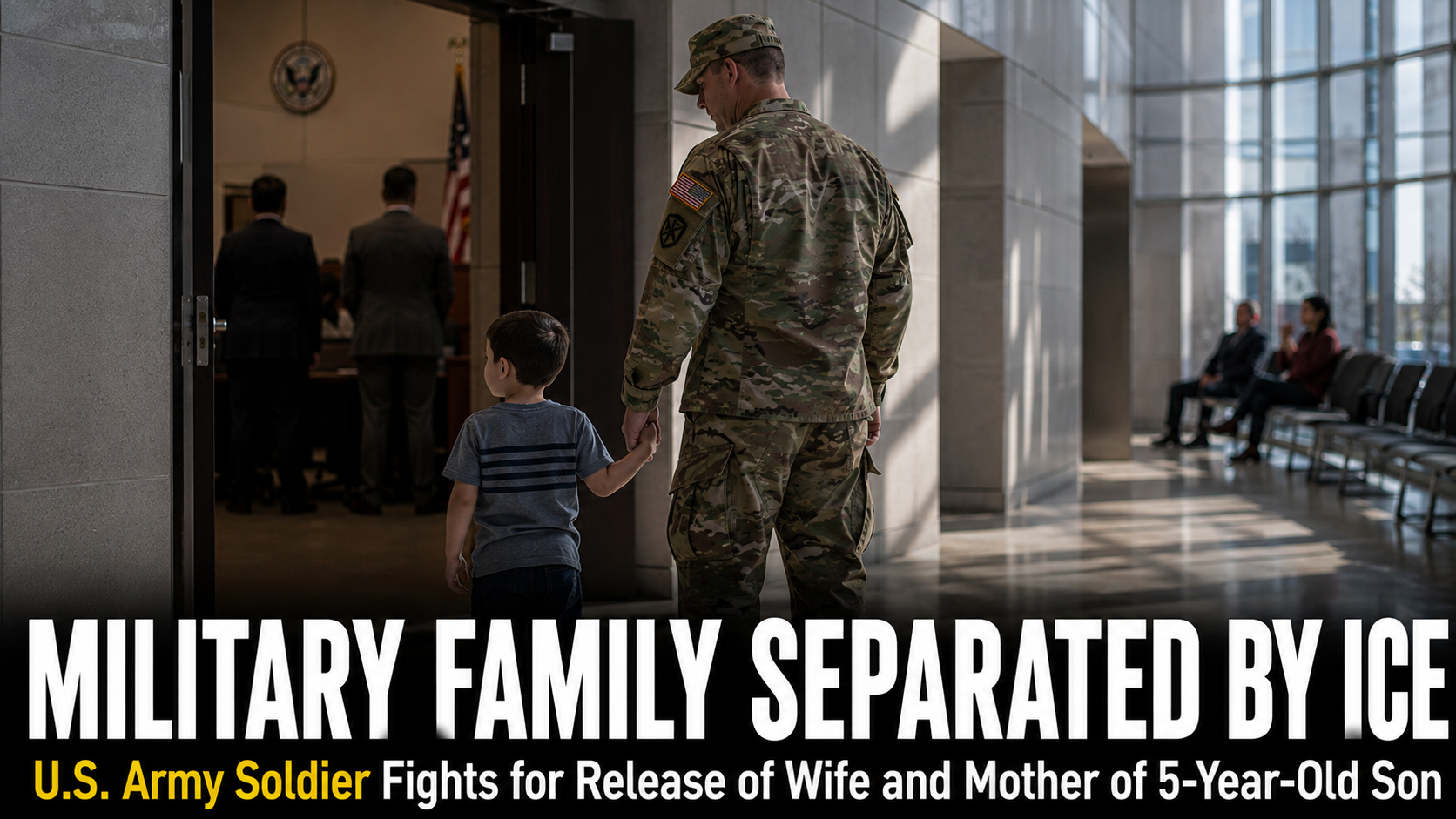
An active-duty U.S. Army soldier is speaking out after Immigration and Customs Enforcement (ICE) officers detained his wife, leaving their 5-year-old son separated from his mother and prompting national concern over federal immigration policies affecting military families.
Direct Case Overview
- Affected Family: Active-duty U.S. Army soldier, his wife, and their 5-year-old son.
- Core Conflict: The soldier’s wife was taken into custody by ICE officers, initiating potential deportation proceedings despite her role as a primary caregiver for their young child.
- Soldier’s Response: Expressed deep feelings of betrayal after serving in the U.S. military while facing the threat of his family being forcibly separated.
- Legal Status & Advocacy: Defense attorneys and military family advocacy groups are appealing for administrative relief, discretionary stay of removal, or military Parole in Place (PIP) status.
- Current Status: The soldier is pursuing urgent legal avenues to secure his wife’s release from federal custody and reunite her with their son.
The Inciting Incident: ICE Detains Military Spouse
According to local reports and family statements, the enforcement action took place during an immigration check-in or routine legal interaction. ICE agents took the soldier’s wife into custody, executing a removal directive despite her marriage to an active-duty member of the U.S. Armed Forces and her responsibilities raising their 5-year-old child.
The sudden arrest left the young boy without his mother and thrust the service member into a high-stakes legal battle while maintaining his military duties.
“I Feel Betrayed”: U.S. Soldier Speaks Out
In statements following the arrest, the service member voiced extreme frustration with federal enforcement actions directed at military households.
“I signed up to serve and protect this country, but when my own family needed protection, the system turned its back on us. I feel completely betrayed.”
— U.S. Army Service Member
Family support organizations emphasize that unexpected enforcement actions against service members’ immediate relatives inflict severe psychological strain and disrupt unit readiness when soldiers are forced to split focus between military duties and urgent civil legal battles.
Legal Relief Options: Parole in Place (PIP) and Administrative Discretion
Under U.S. immigration policy, immediate family members of active-duty military personnel may qualify for Military Parole in Place (PIP).
Key Elements of Military Parole in Place:
- Purpose: Allows non-citizen spouses, parents, and children of active-duty service members to remain in the United States in one-year increments.
- Discretionary Relief: Designed specifically to minimize stress and distraction for active-duty troops serving the nation.
- Path to Adjustment: Provides a temporary legal status that allows qualifying spouses to apply for work authorization and adjust their immigration status without leaving the country.
Legal representatives handling the case are pressing DHS and ICE leadership to grant an immediate stay of deportation and grant emergency parole options to reunite the mother with her child.
Frequently Asked Questions
Can ICE deport the spouse of an active-duty U.S. military soldier?
Yes. Unless a formal legal protection—such as Military Parole in Place (PIP) or a court-ordered stay of removal—is active, immigration laws permit enforcement against individuals with outstanding removal orders, regardless of marital status.
What is Military Parole in Place (PIP)?
Military Parole in Place is an immigration discretionary relief program that permits certain undocumented family members (spouses, children, and parents) of active-duty service members or veterans to stay and work legally in the U.S.
How does family detention affect active-duty service members?
Military advocacy groups note that immigration enforcement targeting military dependents creates severe financial and emotional hardships, directly impacting service members’ operational readiness and focus






2 comments